
Clusia care guides
Clusia hedge cost: what determines your quote
Clusia hedge pricing requires a site-specific quote, not a universal price per plant. Compare plant quality, access, preparation, installation, and follow-up before choosing an offer.
· Clusia King Farms
Start with a defined scope
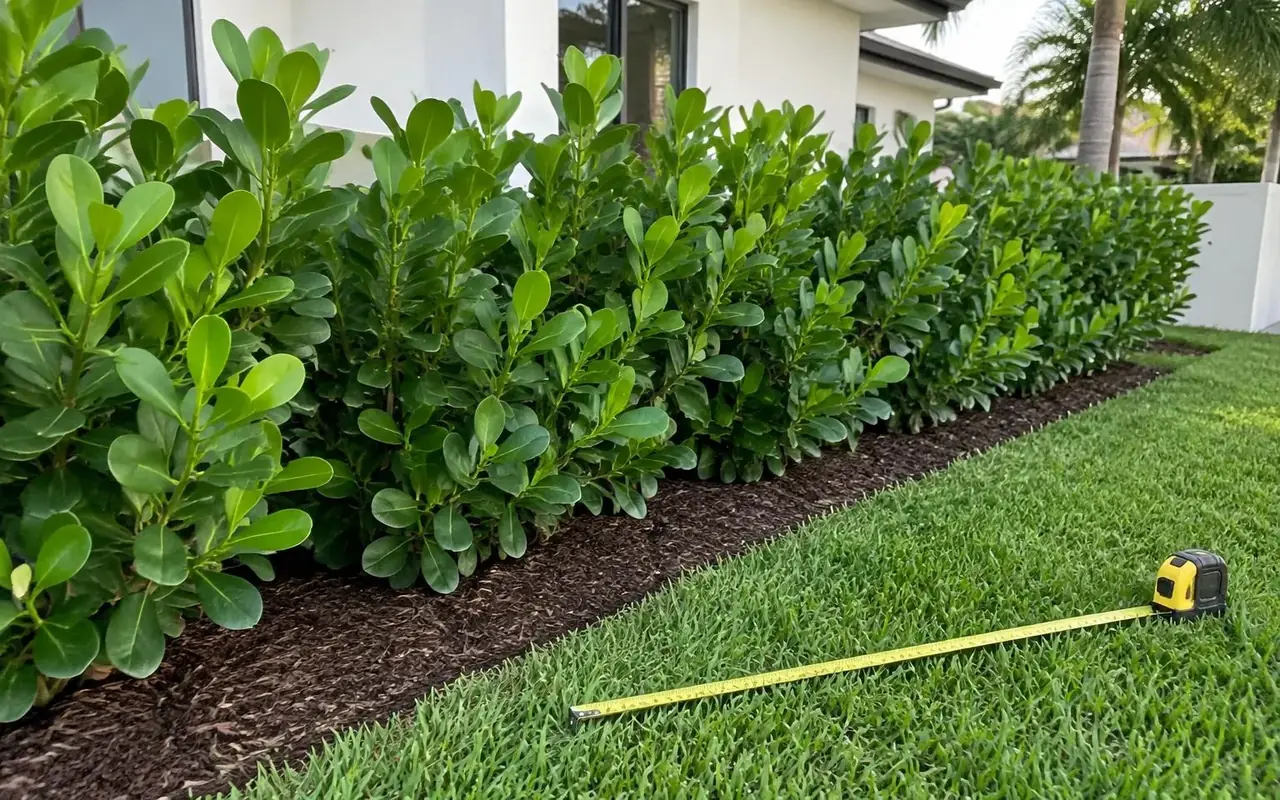
A useful clusia hedge quote starts with measured hedge length and an agreed finished appearance. Ask whether the proposal covers plant supply only or a complete installation, including delivery, bed preparation, planting, irrigation adjustments, and cleanup. Two offers that look different may simply include different work. Explain whether privacy is needed immediately or can develop over time, because this affects the size and fullness of nursery stock being considered. Measure separate runs individually and identify gates and corners. Do not count inaccessible fence sections as easy planting space. A site visit is especially valuable where existing vegetation, narrow passages, or drainage problems could change the work required.
Identify the plant before choosing a plan
Confirm the botanical name on the nursery label and ask the supplier to identify the actual stock. Clusia rosea and the small-leaved plant commonly sold as Clusia guttifera are not interchangeable names. UF/IFAS documents C. rosea as a tree reaching about 25–30 feet tall and 15–25 feet wide, with moderate growth. Those dimensions describe an unrestrained tree, not a promise about a regularly clipped hedge. The same publication lists USDA zones 10B–11, full sun to dappled shade, and high drought and aerosol salt tolerance. Treat those tolerances as established-plant characteristics, not permission to neglect new transplants. Do not transfer its hardiness, mature dimensions, or other species-specific data automatically to C. guttifera. Keep the plant label and any written nursery identification with your landscape records.
Plant size, fullness, and consistency
Compare the actual plants rather than treating container labels as a complete quality standard. Height alone does not describe branching, lower foliage, root condition, or consistency across a batch. Ask for current photographs and confirm which dimensions the supplier measures. Larger stock may provide more immediate screening, but it can require more handling and careful establishment; it is not automatically the better value for every site. A smaller, healthy, well-branched plant can be a sensible option when time and space allow. Specify whether substitutions require approval, and whether the quote assumes a particular species, stock height, or container size. Confirm how damaged or unsuitable plants will be addressed before delivery.
Preparation and access change the job
Removal of an old hedge, stump handling, disposal, restricted delivery access, and protection of existing surfaces can all affect a quote. Ask whether these items are included or listed as allowances that may change after inspection. Poor drainage should be investigated rather than hidden under fresh planting soil. Irrigation work may involve testing coverage, repairing leaks, or separating a hedge from an unsuitable watering zone. Clarify who obtains any necessary approvals and who restores disturbed lawn or paving. If work must pass through a narrow side yard, send measurements and photographs before ordering. The cheapest plant supply does not necessarily produce the lowest complete project cost once these site tasks are considered.
Check the Florida site, not just the address
Florida is not one uniform growing environment. Compare your property's winter exposure, hours of direct light, drainage, and available bed width before selecting clusia. A warm coastal courtyard and an exposed inland lot can behave differently even within the same community. Check the bed after a substantial rain and look for standing water, soil washed against stems, and runoff arriving from adjacent paving. Locate irrigation pipes, underground services, septic components, easements, and access routes before excavation. Arrange utility marking through the appropriate service; private lines may require a separate locator. Ask a qualified landscape professional to assess tight boundaries, questionable drainage, or conflicts with structures. A hedge should fit its maintained size without blocking visibility, gates, equipment access, or required clearances. Where the site does not fit, changing the plant or layout is better than relying on constant corrective maintenance.
Compare quotes on the same basis
Create a comparison checklist with species, quantity, stock dimensions, proposed spacing, delivery, installation, irrigation work, cleanup, and follow-up as separate lines. Ask each provider to identify exclusions and explain how unexpected conditions are priced. Read replacement terms carefully: duration, inspection requirements, irrigation responsibilities, and excluded causes matter more than a vague guarantee. Confirm payment stages and how changes will be approved in writing. Request a site-specific quote rather than extrapolating a neighbor's project. Include future pruning and access in your decision, even if maintenance is contracted separately. A transparent scope makes it easier to choose a suitable installation instead of buying an appealing but incomplete headline offer.
Support establishment without a rigid schedule
Inspect the original root ball and the surrounding soil separately; they can hold very different amounts of moisture. Check below the surface with a finger or suitable probe before deciding whether to water. Water when those checks show a need, applying it slowly enough to wet the root zone without sustained ponding. Rainfall, soil texture, wind, season, and nursery container size all change that decision. A timer setting is not evidence that roots received enough water. Keep mulch away from stems and avoid burying the root flare when adding soil or refreshing beds. Do not use fertilizer as a first response to stress. Review drainage, planting depth, roots, and irrigation first; obtain soil guidance and follow product labels and applicable local fertilizer restrictions if feeding is justified. Newly installed plants need observation even when established clusia nearby appears self-sufficient.
A practical checklist and reliable references
Before authorizing work, record the plant identification, measured bed dimensions, desired finished height, and any access restrictions. Photograph the whole planting and representative leaves so future changes are easier to compare. Walk the entire line rather than judging it from one attractive plant. After rain or irrigation, check low spots and a few root balls along both sunny and shaded stretches. Record what you actually observe before changing water, fertilizer, or pruning. Request a written scope that explains who handles installation corrections, debris removal, and follow-up inspections. If a problem persists or a major structural decision is involved, consult your county Extension office or an appropriately qualified landscape or tree professional.
Reference checks for this guide: UF/IFAS ST172, “Clusia rosea: Pitch Apple” (https://ask.ifas.ufl.edu/publication/ST172); Sarasota County Extension's species comparison (https://blogs.ifas.ufl.edu/sarasotaco/2024/02/07/flora-da-friendly-features-imposter-pitch-apple/); and Hillsborough County Extension's landscape overview (https://blogs.ifas.ufl.edu/hillsboroughco/2021/12/31/clusia-a-hugely-popular-landscape-plant/). Apply each source only to the plant and conditions it actually discusses.
Before you plant
- Confirm the botanical species and mature size.
- Check drainage, irrigation, utilities and property setbacks.
- Measure hedge length and discuss starting height.
- Review local restrictions and your written quote.
Check your USDA hardiness zone
Questions, answered
Plant care references
Clusia King Farms
Best Clusia in Florida
Get a farm-direct quote in minutes.
Step 1 of 3