
Clusia care guides
Clusia problems: yellow leaves, pests and common causes
Yellow leaves and sparse growth need diagnosis, not automatic fertilizer or pesticide. Check the root ball, irrigation, planting depth and symptom pattern before treating a Clusia hedge.
· Clusia King Farms
Yellow leaves are a symptom, not a diagnosis
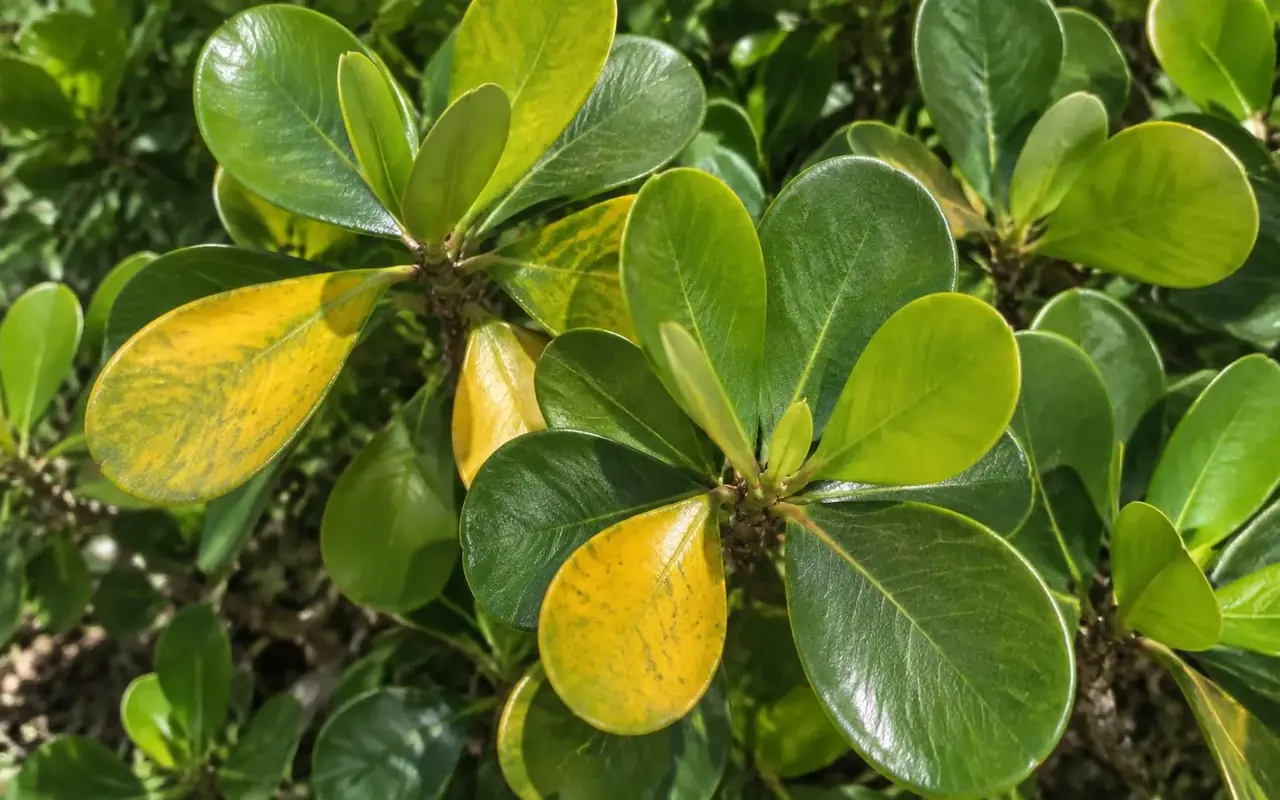
A yellow leaf does not tell you whether the plant needs more water, less water, fertilizer, or pest treatment. Start by describing the pattern: one older interior leaf, several recently planted individuals, one end of a hedge, or the entire row. Note when the change began and whether it followed delivery, pruning, heavy rain, cold weather, or an irrigation adjustment. Photograph the whole hedge before taking close-ups. Different causes can produce similar visible symptoms, and adding several treatments at once makes the cause harder to understand. Check the plant label and the root environment before deciding on an intervention. Treat the observation as a request for evidence, not as a reason to buy a product immediately.
Separate dry root balls from saturated soil
The nursery root ball and surrounding soil can behave differently after installation. Inspect both below the surface rather than judging moisture from the lawn or a controller display. A blocked emitter can leave one plant dry while neighboring soil looks wet. Heavy rain can also leave poorly drained soil saturated even after the surface appears normal. Watch an irrigation cycle and identify where water actually reaches the bed. Adjust the delivery method to the observed need, then check again. Wilting alone is not proof of dryness: impaired roots in wet soil can also leave foliage stressed. If the condition remains unclear, ask for a professional assessment before making a large change in the watering routine.
Inspect leaves, stems and planting depth
Look at the top and underside of leaves, the inner canopy, stems, and the base of each affected plant. Distinguish chewed tissue, cut leaf edges, discoloration, and material attached to the surface without assuming they have the same cause. Photograph anything that appears to be an insect or scale, including a size reference, and seek identification through Extension or a qualified plant professional. Check whether soil or mulch has accumulated against stems and whether handling straps or other materials remain attached. Avoid scraping or cutting healthy tissue in an attempt to diagnose a problem yourself. A single close-up may miss a planting-depth or mechanical issue visible only in the broader view. Record what you find before applying treatments.
Do not add fertilizer or pesticide blindly
Fertilizer does not repair an irrigation failure, saturated roots, damaged stems, or a cold-injured canopy. Likewise, a pesticide cannot solve a drainage or planting-depth problem. Obtain a diagnosis before choosing a chemical response, and follow the exact product label and local restrictions if treatment is justified. Keep applications off paving and away from runoff routes. Avoid assuming that a product described for hedges is appropriate for every Clusia species or situation. Save the label and record the application date so an adviser can evaluate any later changes. Multiple unnecessary inputs can make symptoms worse and complicate recovery. A soil test or targeted assessment may be more useful than a broad treatment when the evidence points to a nutrient or root-zone question.
Build a record and know when to ask for help
Take photographs from the same positions over time, noting irrigation changes, rainfall events, recent pruning, and the first appearance of symptoms. Compare affected and unaffected plants rather than recording only the worst leaf. Include the species label, installation date, and anything known about soil or site work in a request for advice. Seek help promptly when decline spreads, stems die back, a plant becomes unstable, or the root zone remains persistently wet despite adjustments. Do not promise recovery within a fixed number of days, and do not remove every leafless branch before the extent of damage is understood. An adviser may recommend observation, targeted treatment, drainage correction, or replacement depending on the evidence. Reliable records make that decision more useful than guessing from memory.
Identify the plant before choosing a plan
Confirm the botanical name on the nursery label and ask the supplier to identify the actual stock. Clusia rosea and the small-leaved plant commonly sold as Clusia guttifera are not interchangeable names. UF/IFAS documents C. rosea as a tree reaching about 25–30 feet tall and 15–25 feet wide, with moderate growth. Those dimensions describe an unrestrained tree, not a promise about a regularly clipped hedge. The same publication lists USDA zones 10B–11, full sun to dappled shade, and high drought and aerosol salt tolerance. Treat those tolerances as established-plant characteristics, not permission to neglect new transplants. Do not transfer its hardiness, mature dimensions, or other species-specific data automatically to C. guttifera. Keep the plant label and any written nursery identification with your landscape records.
Check the Florida site, not just the address
Florida is not one uniform growing environment. Compare your property's winter exposure, hours of direct light, drainage, and available bed width before selecting clusia. A warm coastal courtyard and an exposed inland lot can behave differently even within the same community. Check the bed after a substantial rain and look for standing water, soil washed against stems, and runoff arriving from adjacent paving. Locate irrigation pipes, underground services, septic components, easements, and access routes before excavation. Arrange utility marking through the appropriate service; private lines may require a separate locator. Ask a qualified landscape professional to assess tight boundaries, questionable drainage, or conflicts with structures. A hedge should fit its maintained size without blocking visibility, gates, equipment access, or required clearances. Where the site does not fit, changing the plant or layout is better than relying on constant corrective maintenance.
Support establishment without a rigid schedule
Inspect the original root ball and the surrounding soil separately; they can hold very different amounts of moisture. Check below the surface with a finger or suitable probe before deciding whether to water. Water when those checks show a need, applying it slowly enough to wet the root zone without sustained ponding. Rainfall, soil texture, wind, season, and nursery container size all change that decision. A timer setting is not evidence that roots received enough water. Keep mulch away from stems and avoid burying the root flare when adding soil or refreshing beds. Do not use fertilizer as a first response to stress. Review drainage, planting depth, roots, and irrigation first; obtain soil guidance and follow product labels and applicable local fertilizer restrictions if feeding is justified. Newly installed plants need observation even when established clusia nearby appears self-sufficient.
A practical checklist and reliable references
Before authorizing work, record the plant identification, measured bed dimensions, desired finished height, and any access restrictions. Photograph the whole planting and representative leaves so future changes are easier to compare. Walk the entire line rather than judging it from one attractive plant. After rain or irrigation, check low spots and a few root balls along both sunny and shaded stretches. Record what you actually observe before changing water, fertilizer, or pruning. Request a written scope that explains who handles installation corrections, debris removal, and follow-up inspections. If a problem persists or a major structural decision is involved, consult your county Extension office or an appropriately qualified landscape or tree professional.
Reference checks for this guide: UF/IFAS ST172, “Clusia rosea: Pitch Apple” (https://ask.ifas.ufl.edu/publication/ST172); Sarasota County Extension's species comparison (https://blogs.ifas.ufl.edu/sarasotaco/2024/02/07/flora-da-friendly-features-imposter-pitch-apple/); and Hillsborough County Extension's landscape overview (https://blogs.ifas.ufl.edu/hillsboroughco/2021/12/31/clusia-a-hugely-popular-landscape-plant/). Apply each source only to the plant and conditions it actually discusses.
Before you plant
- Confirm the botanical species and mature size.
- Check drainage, irrigation, utilities and property setbacks.
- Measure hedge length and discuss starting height.
- Review local restrictions and your written quote.
Check your USDA hardiness zone
Questions, answered
Plant care references
Clusia King Farms
Best Clusia in Florida
Get a farm-direct quote in minutes.
Step 1 of 3